
UX/UI DEsign | Wave ecosystem + first e-commerce experience
MOTOROLA ONLINE STORE AND SUBSCRIPTION
Designing a human-centered digital commerce experience that unifies software, hardware, and people.
my ROle
UX Research | Information Architecture |UX Designer | Cross-Functional Collaboration
Tools
Sketch | InVision | Zeplin | Jira
Timeline
6 months
Deliverables
User flow diagrams, annotated Wireframes and interactive prototypes, content map, Product detail and checkout flows, high-fidelity UX/UI design for desktop, tablet, and mobile
OVERVIEW
01
When Motorola Solutions set out to launch its first online store, the goal was clear: create a seamless, scalable experience that could sell both hardware and digital products directly to customers.
As part of the early design team, I helped define the UX foundation—from information architecture and UI system to the end-to-end subscription flow (WAVE), which became a proof of concept for future commerce initiatives.
CHALLENGE
02
Motorola’s legacy web presence focused on marketing and product education, not transactions.
To sell directly to customers, the company needed an entirely new digital framework — one flexible enough to handle physical radios, accessories, and software subscriptions, all under the same brand system.
The challenge was to make it intuitive to explore, compare, and purchase across diverse product types—while upholding Motorola’s visual rigor, enterprise-level security, and global scalability.
GOAL
03
The objective was to design a commerce experience that could evolve with Motorola’s product portfolio—from hardware to SaaS—while ensuring clarity, consistency, and scalability.
We set out to:
Create a unified shopping journey across product types
Simplify plan comparison and product discovery
Build a modular design system to support future launches
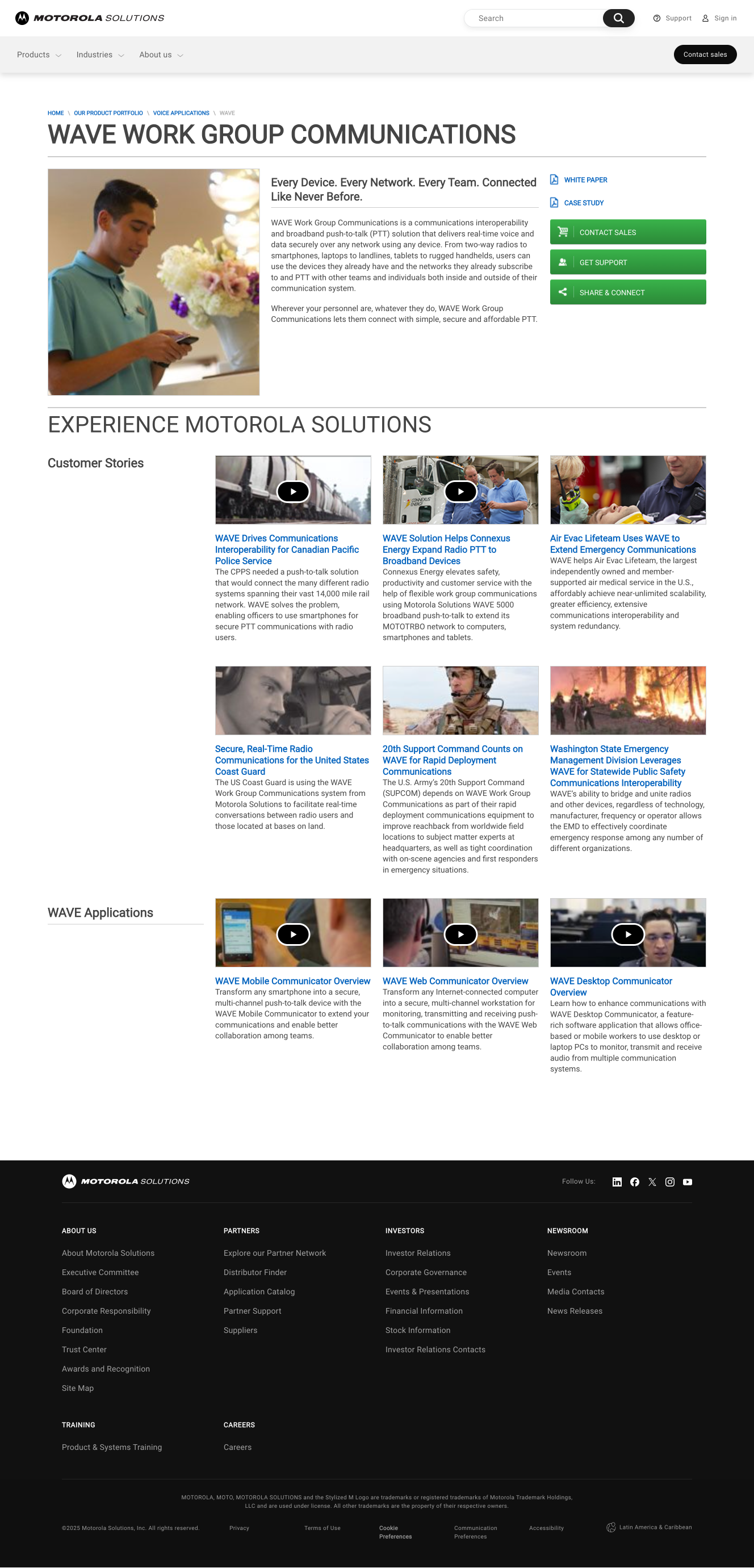
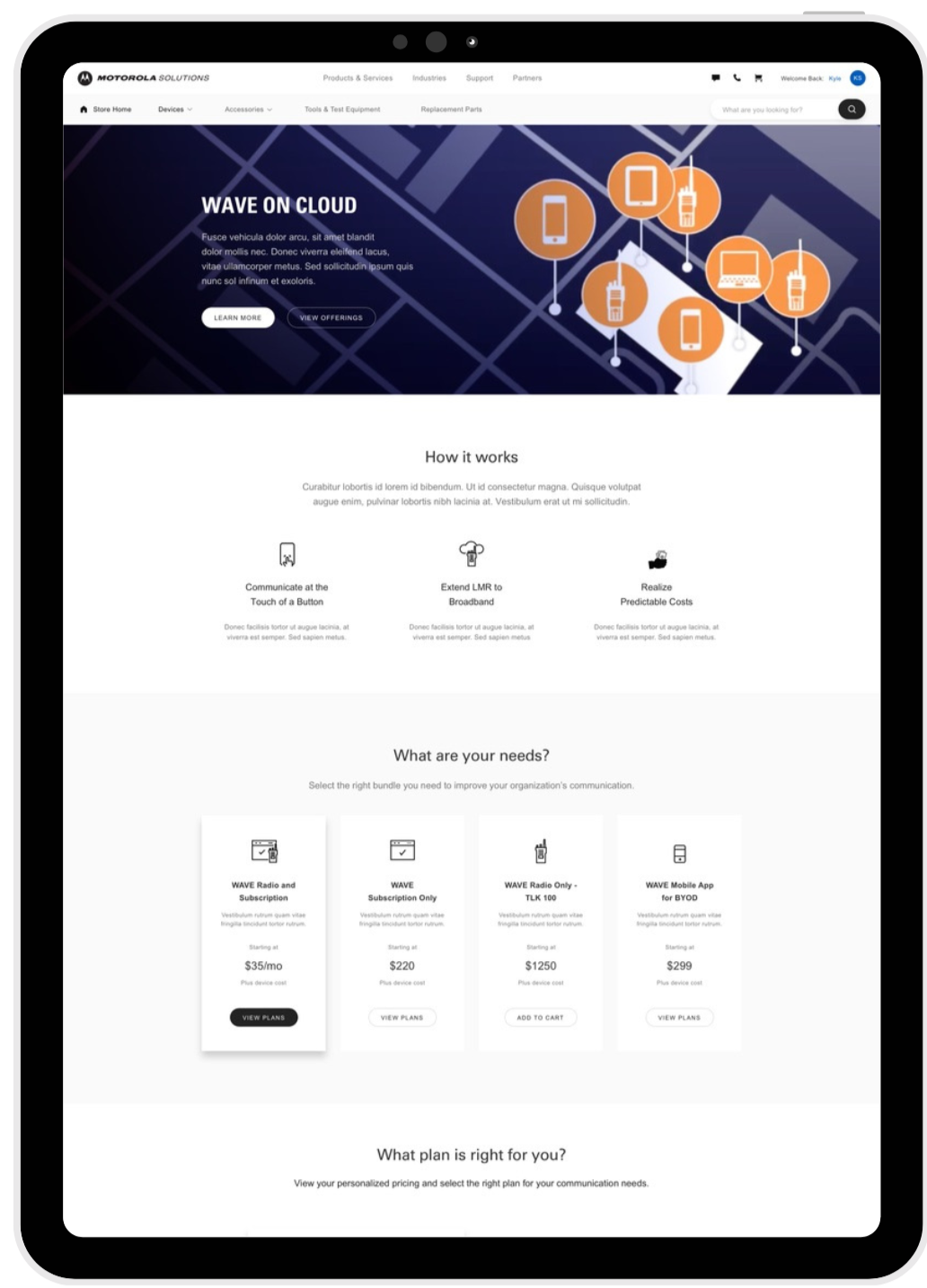
Prototype and test frameworks through WAVE, Motorola’s broadband push-to-talk subscription
PROCESS
04

Discovery & Alignment
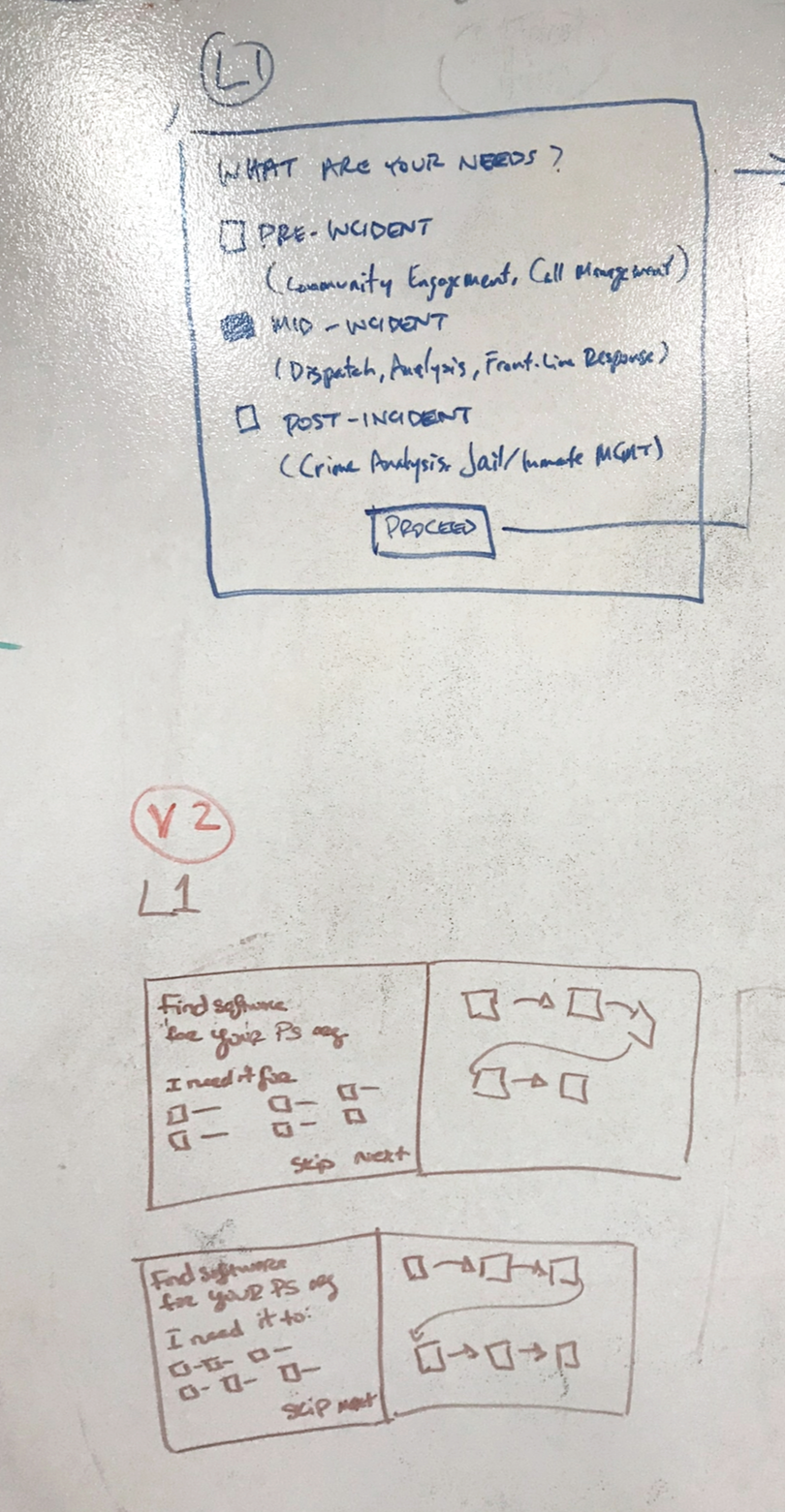
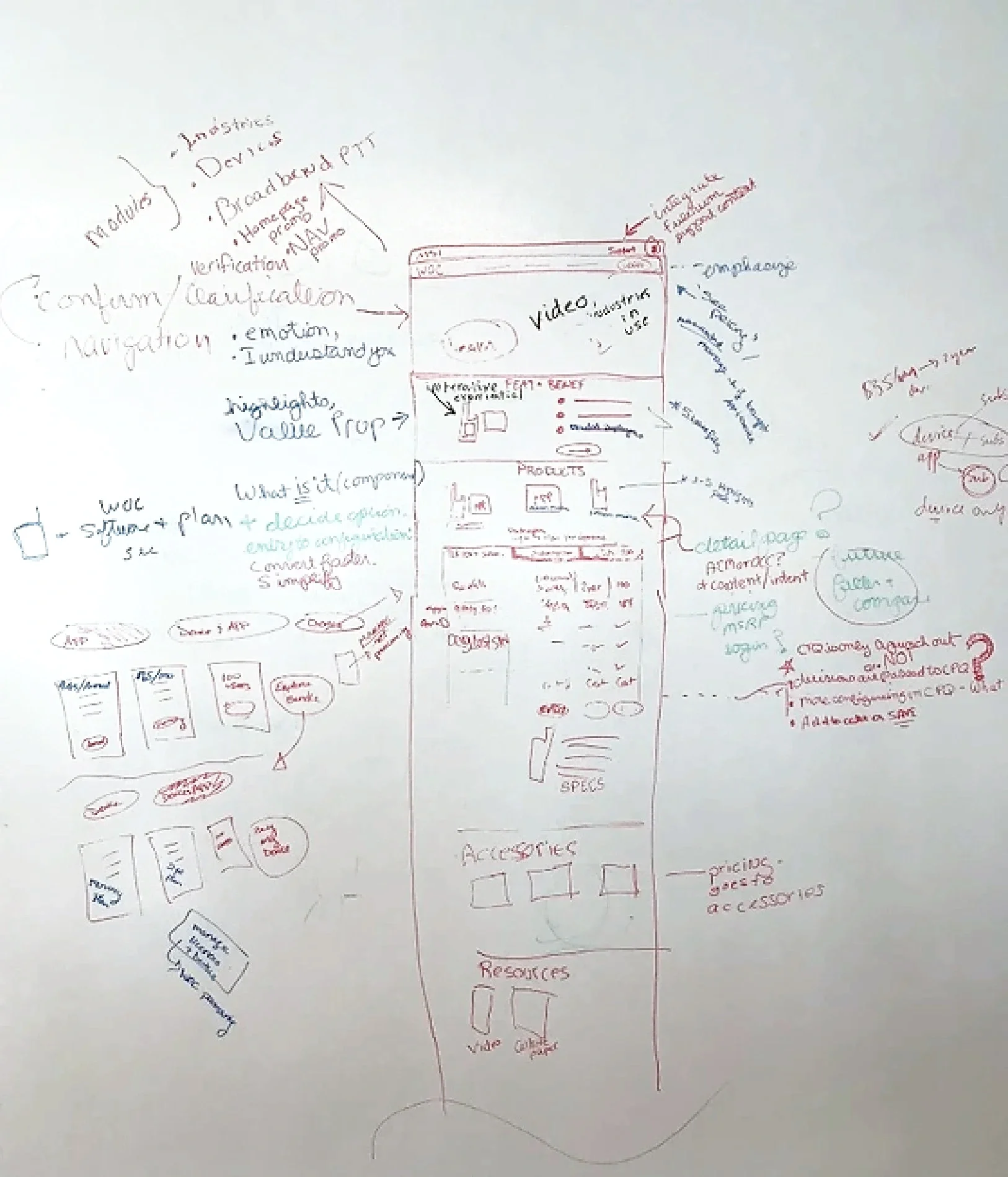
Collaborated with stakeholders across UX, brand, and engineering to define the first-ever e-commerce IA for Motorola Solutions. Conducted workshops to uncover user needs, business constraints, and opportunities for cross-sell and subscription bundling.


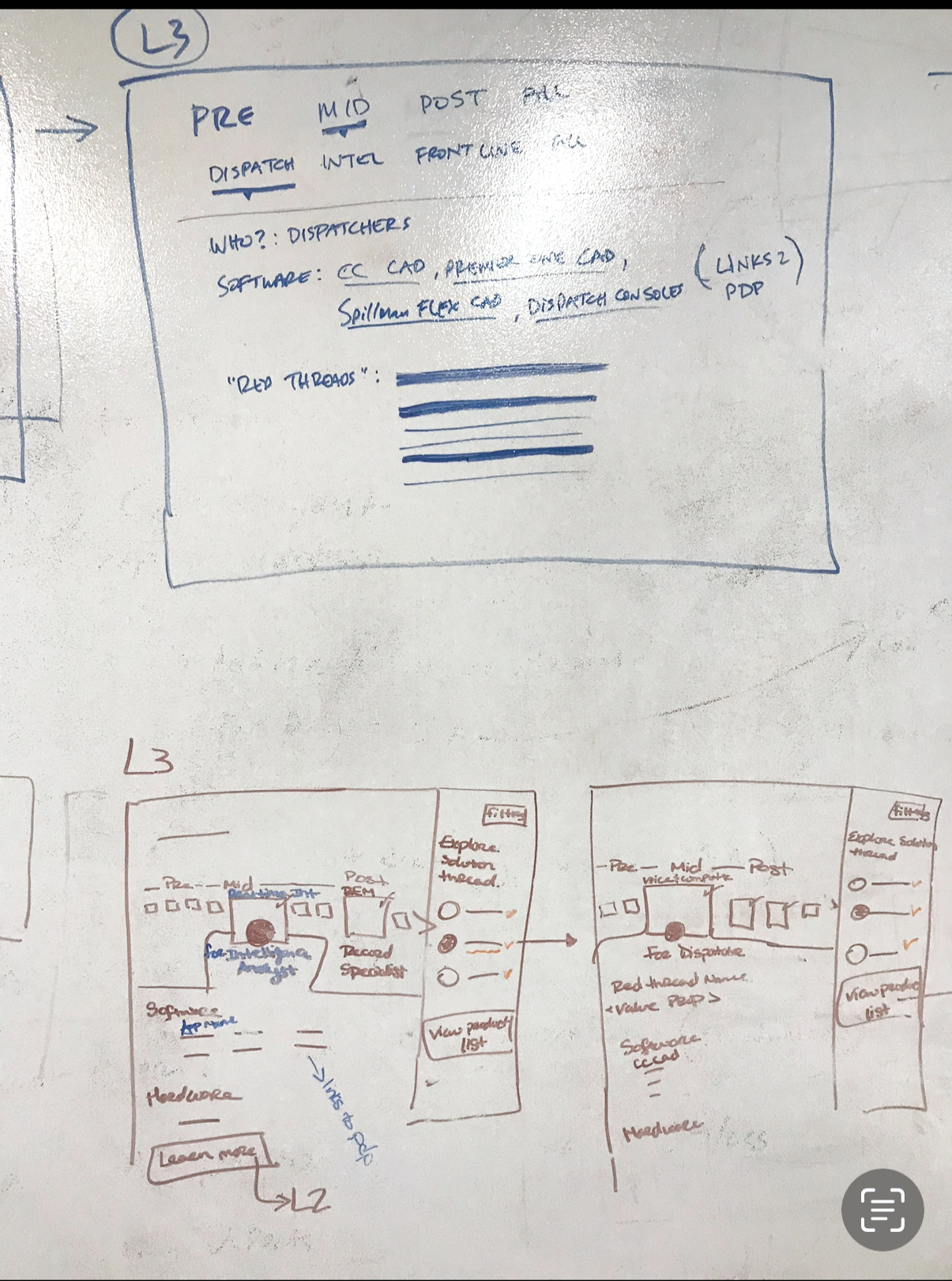
Architecture & Wireframes
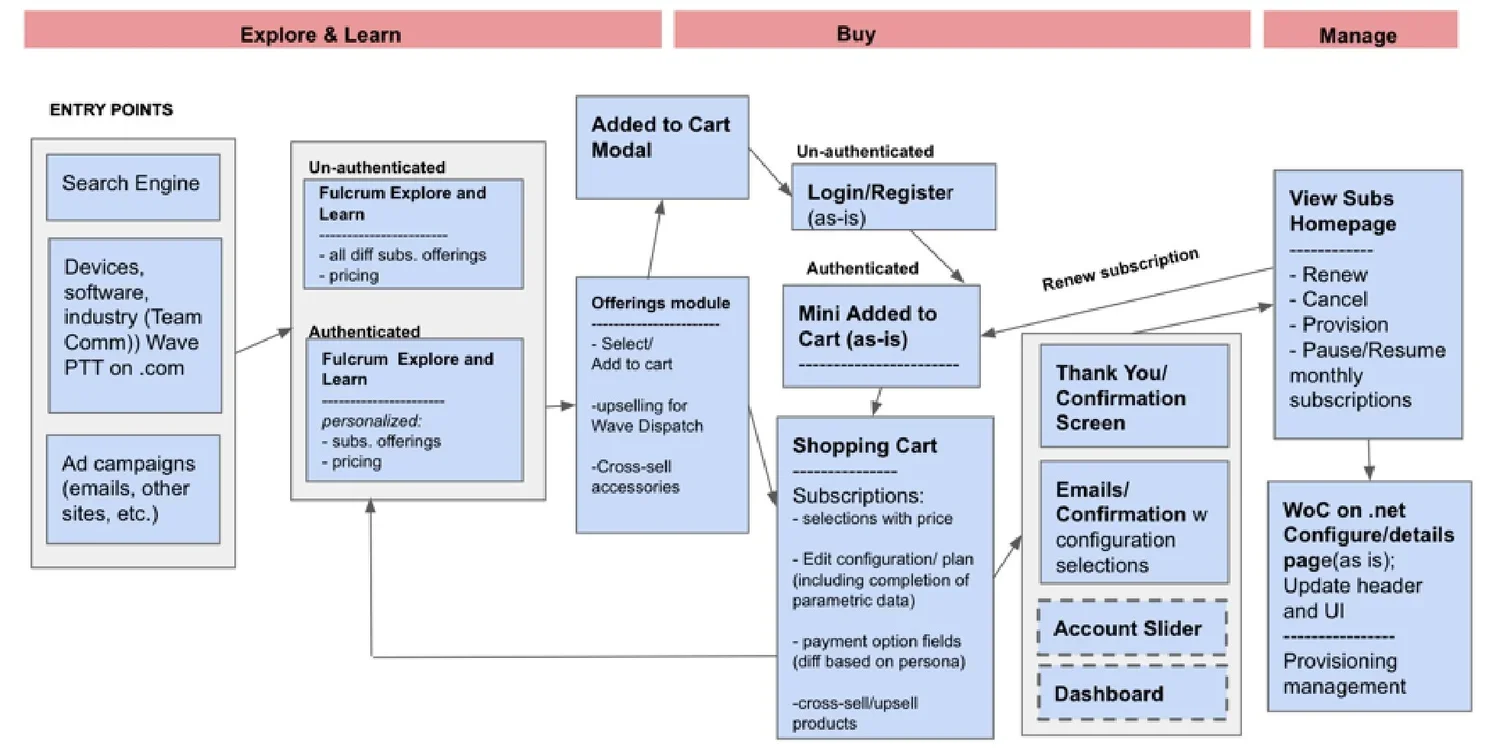
Mapped user flows for exploration, checkout, and account management. Designed flexible templates that could accommodate both one-time purchases and recurring plans.

Hi-Fi Design & Prototyping
Translated wireframes into responsive prototypes, applying Motorola’s global design system for visual cohesion. Partnered with dev teams to validate feasibility and hand off components through Zeplin.
KEY FINDINGS
05
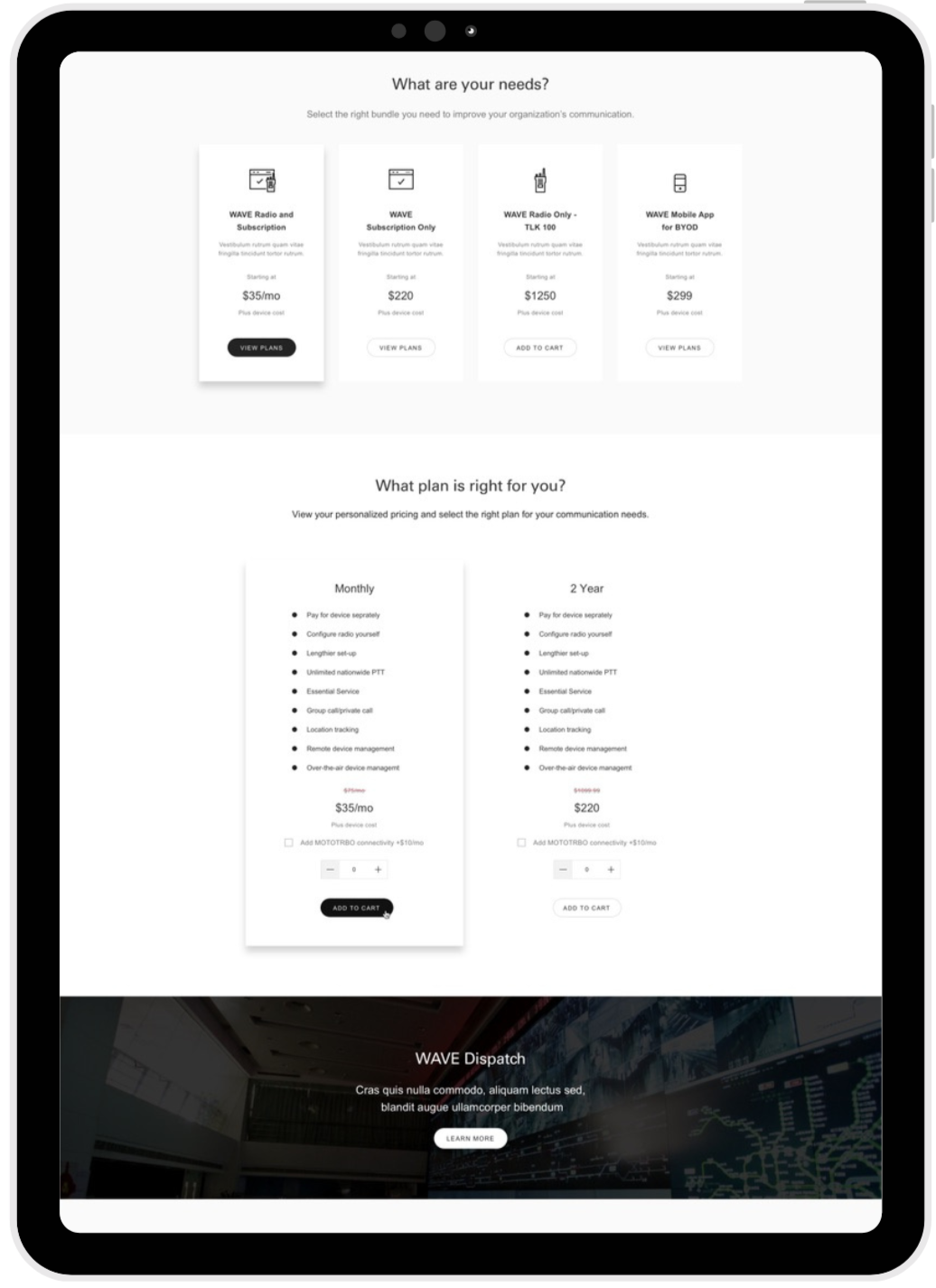
Users struggled to compare software tiers without clear visual hierarchy.
Product pages benefited from modular “quick-view” cards to reduce scroll fatigue.
Transparent pricing and features increased conversion confidence.
Subscription logic (tested in WAVE) validated framework for future SaaS integrations.
IMPLEMENTATION
06
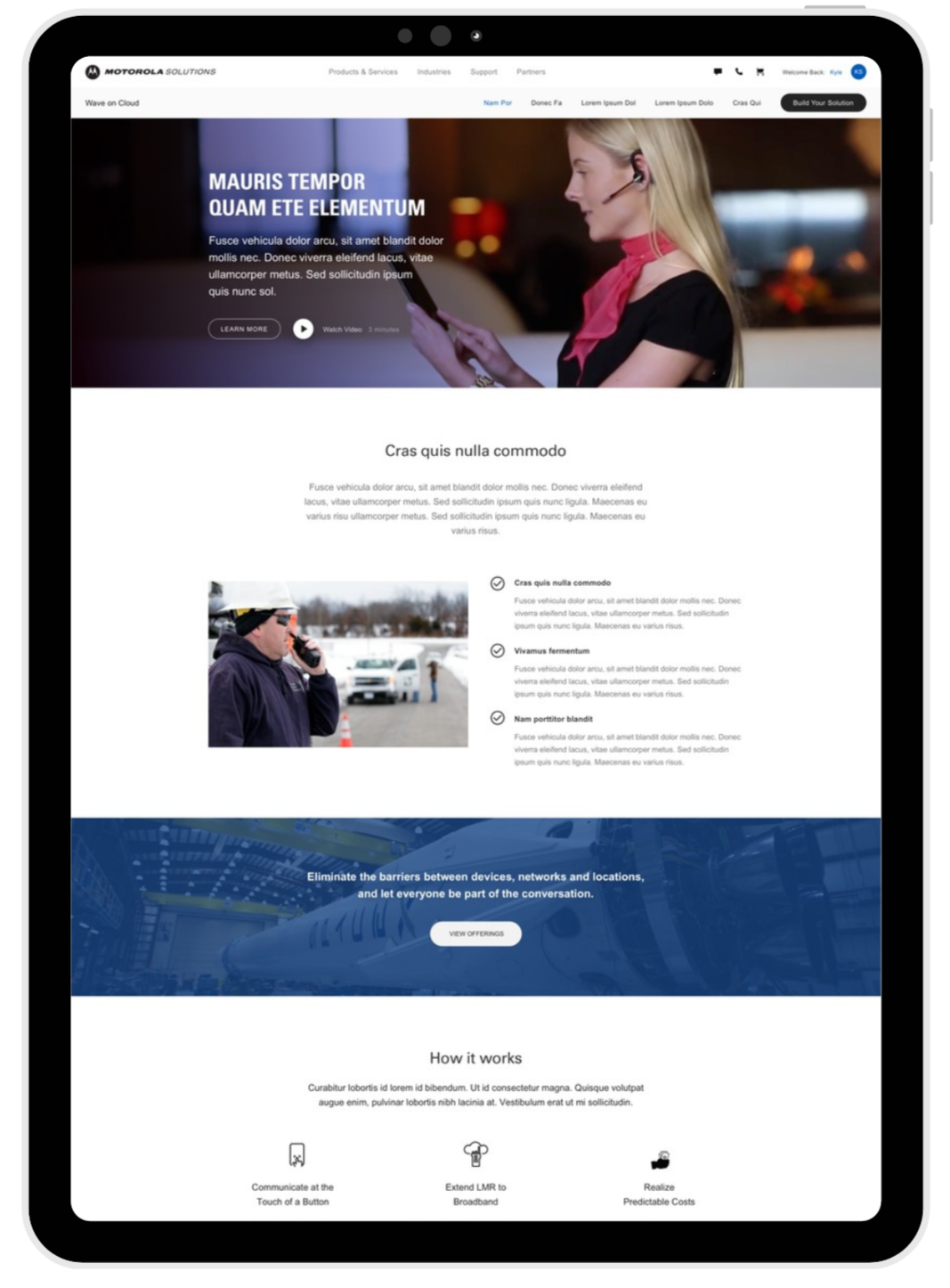
Delivered responsive design templates for:
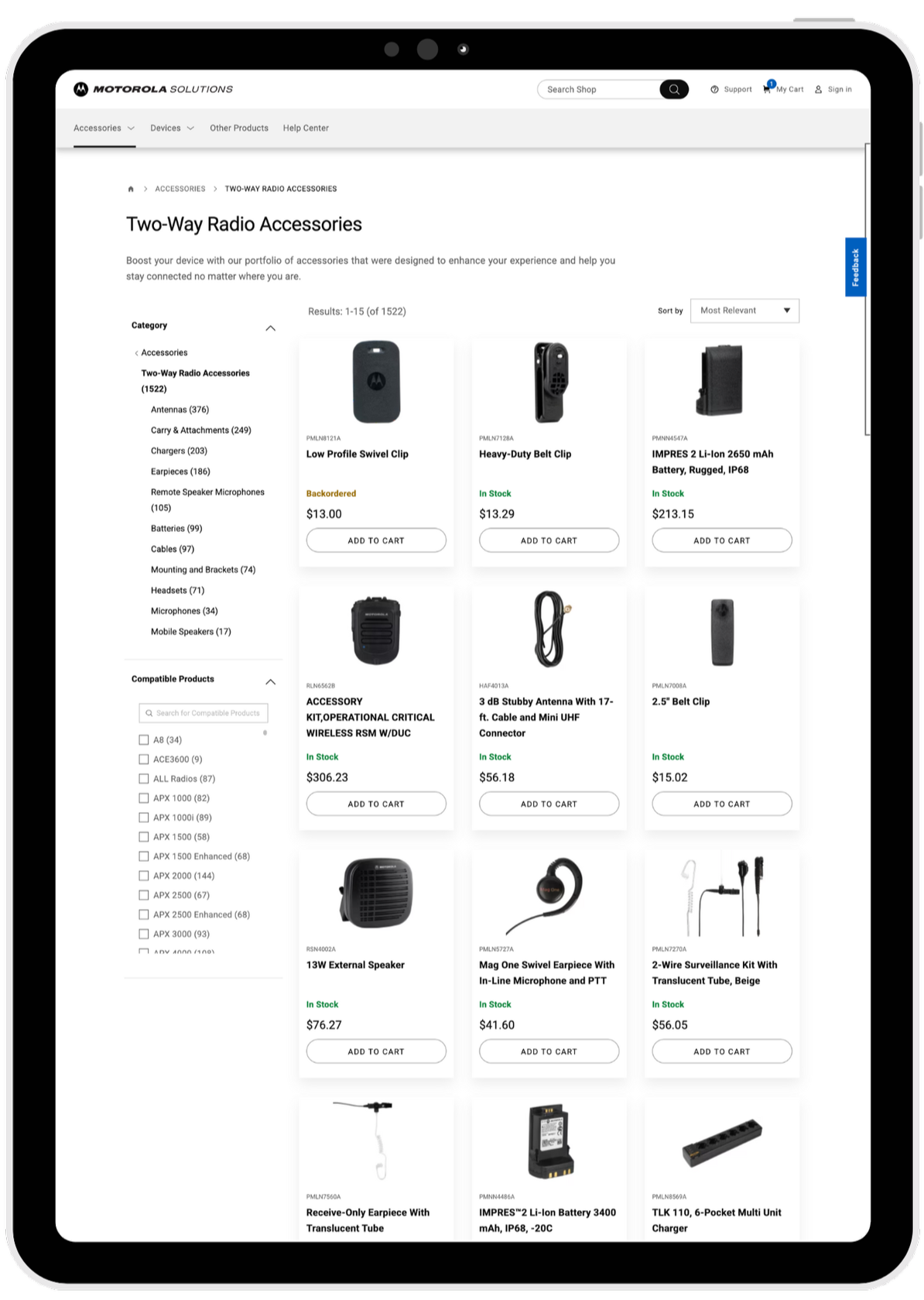
Product catalog & comparison pages
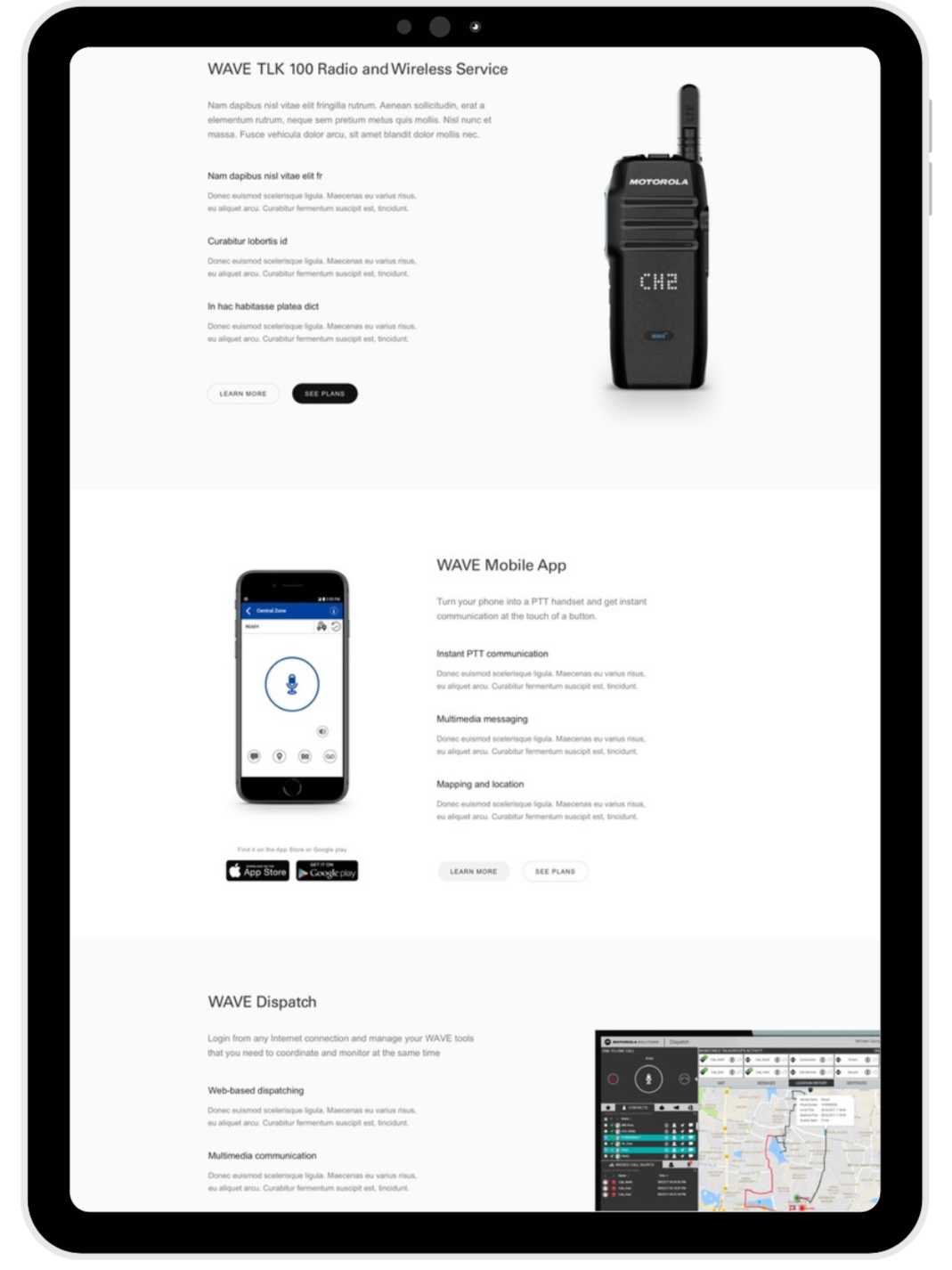
Product detail layouts (hardware + subscription)
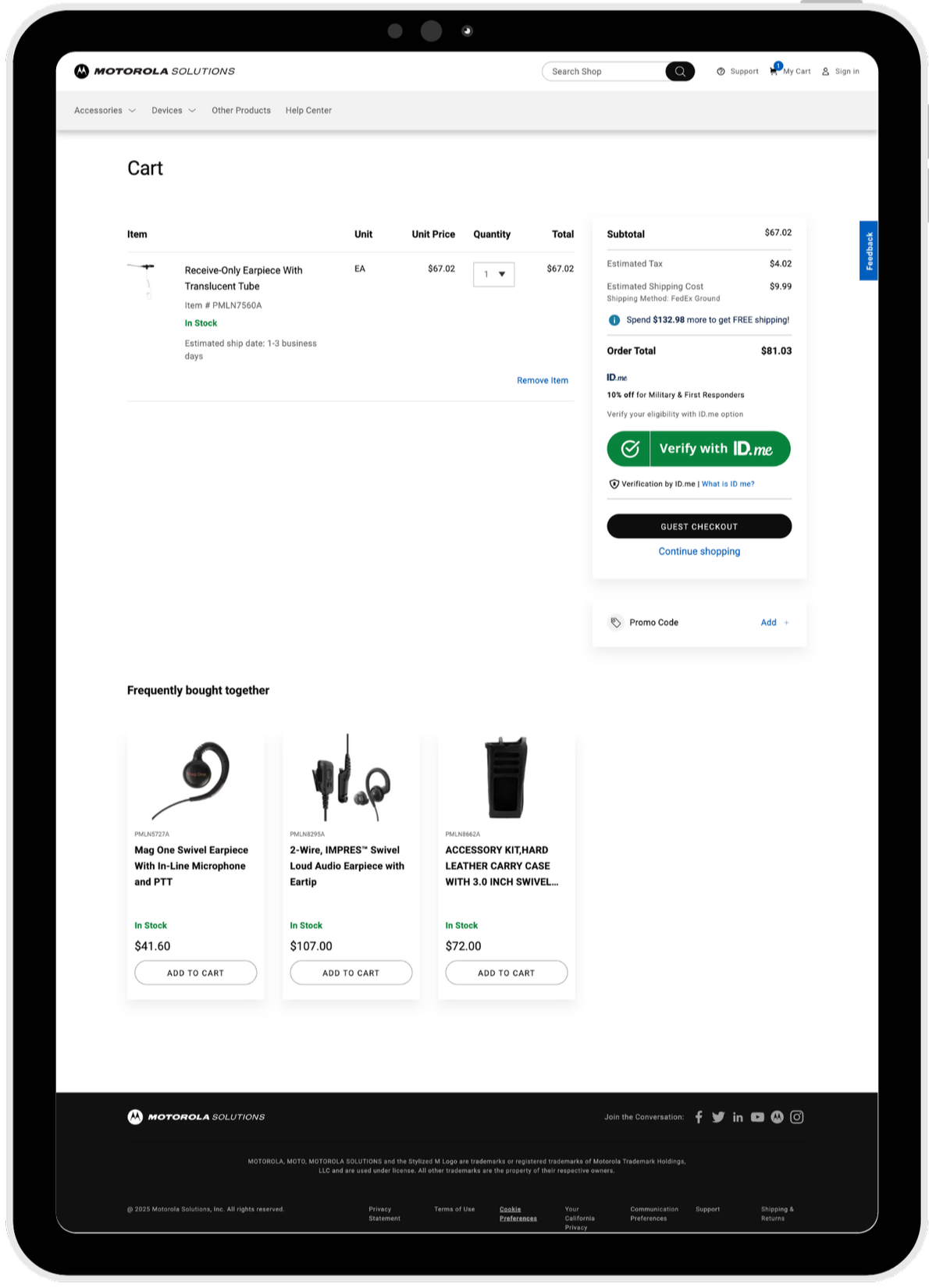
Cart & checkout experience
Subscription management dashboard (WAVE)
Partnered with development teams to ensure design tokens, typography, and components aligned with the global design system and could scale across future storefronts.
OUTCOME
07
Delivered a modern, responsive e-commerce experience optimized for both enterprise and consumer audiences. This work laid the groundwork for Motorola Solutions’ first-ever online store launch — shop.motorolasolutions.com — establishing the UX and design patterns now used across its e-commerce ecosystem.
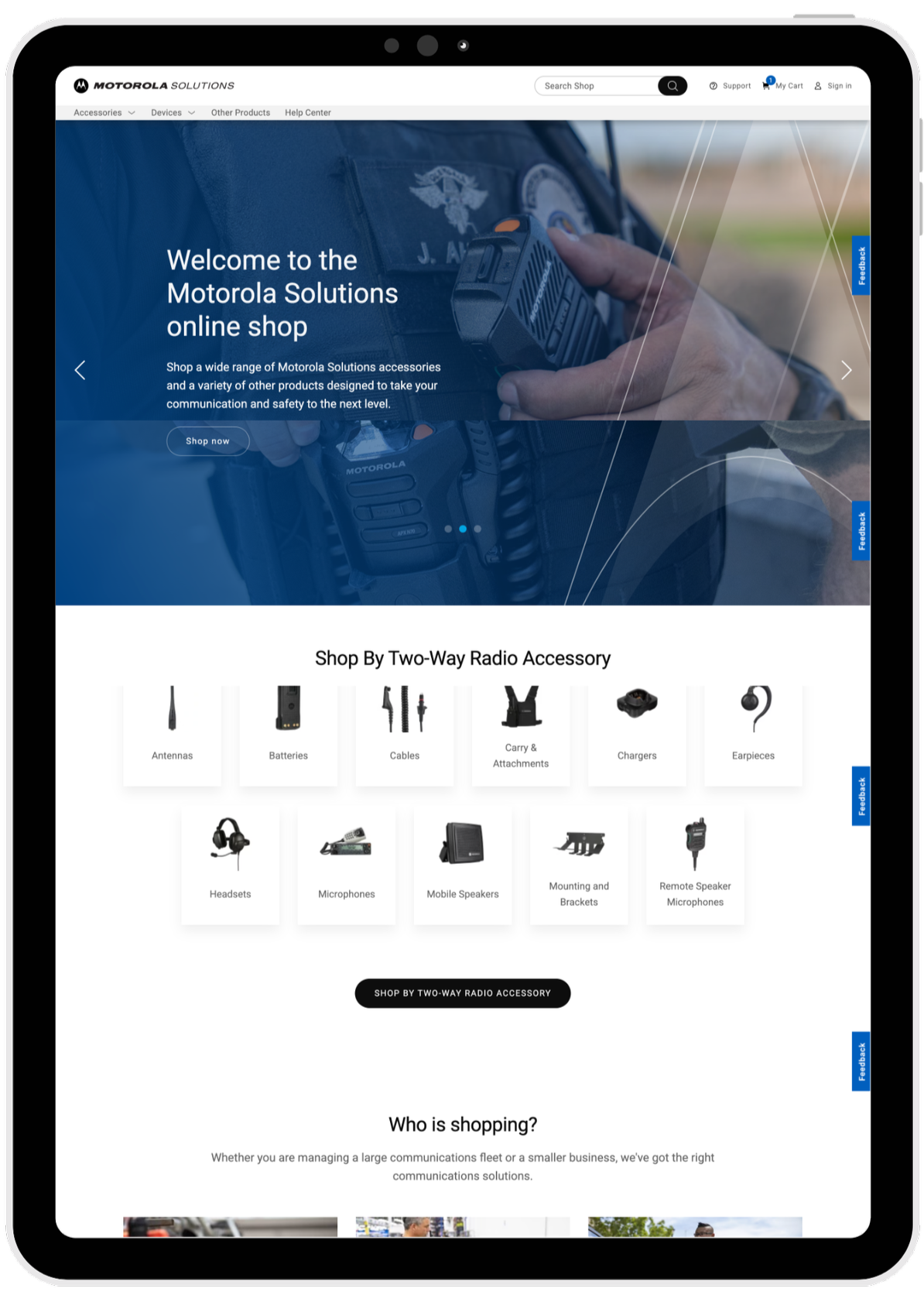
Online Shop Homepage
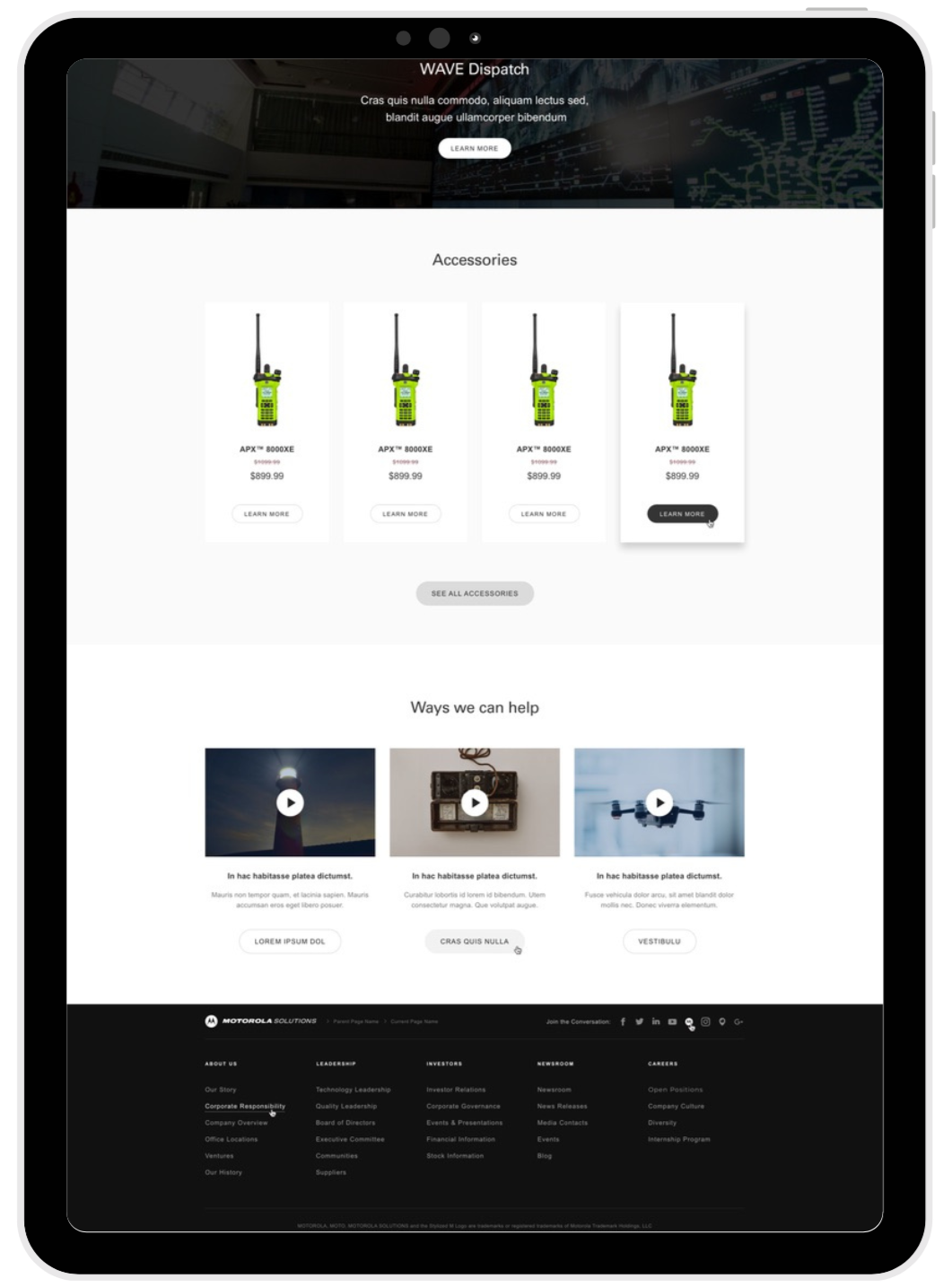
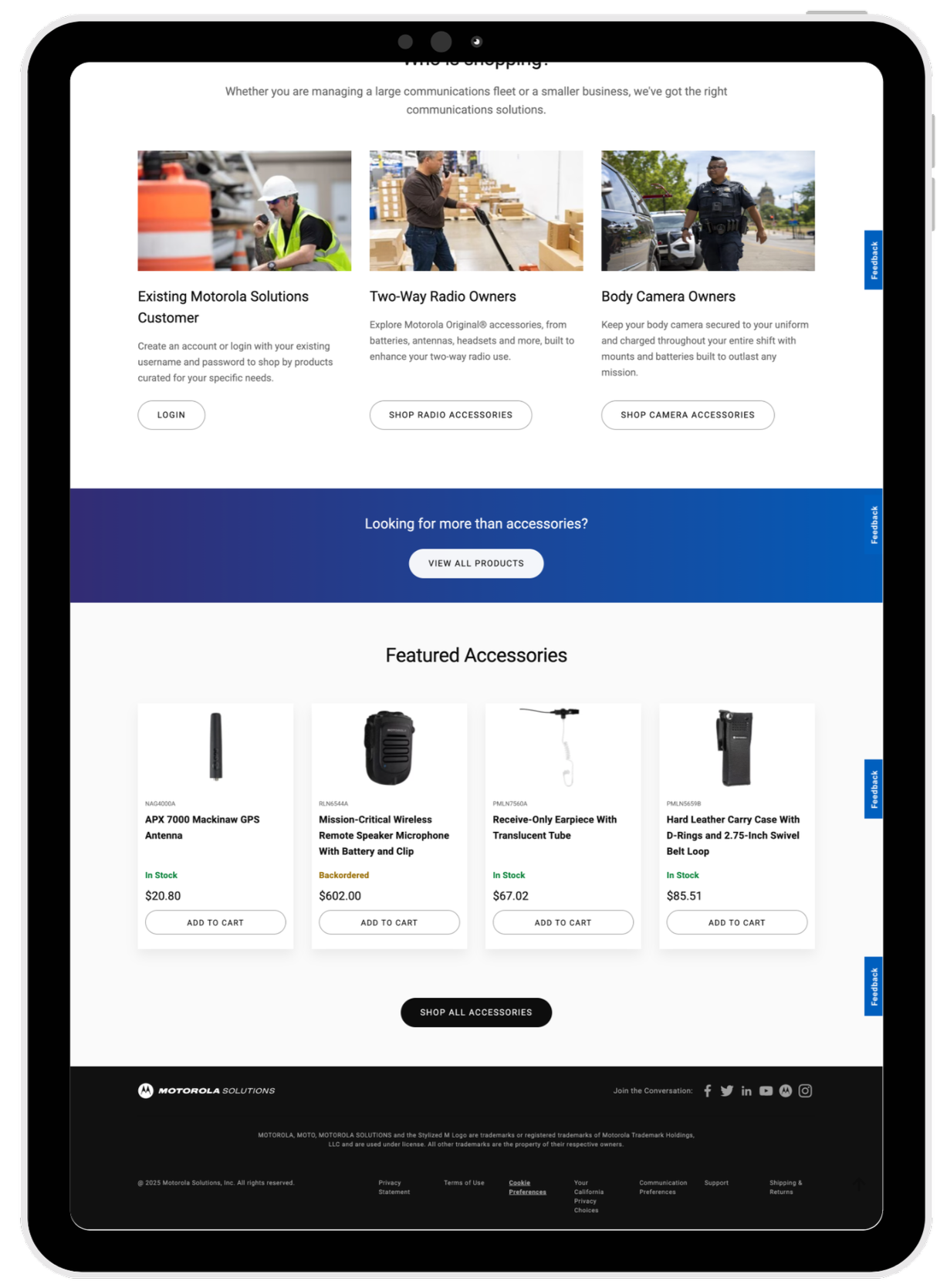
Bottom of Online Shop Homepage
All Accessories Page with Filters
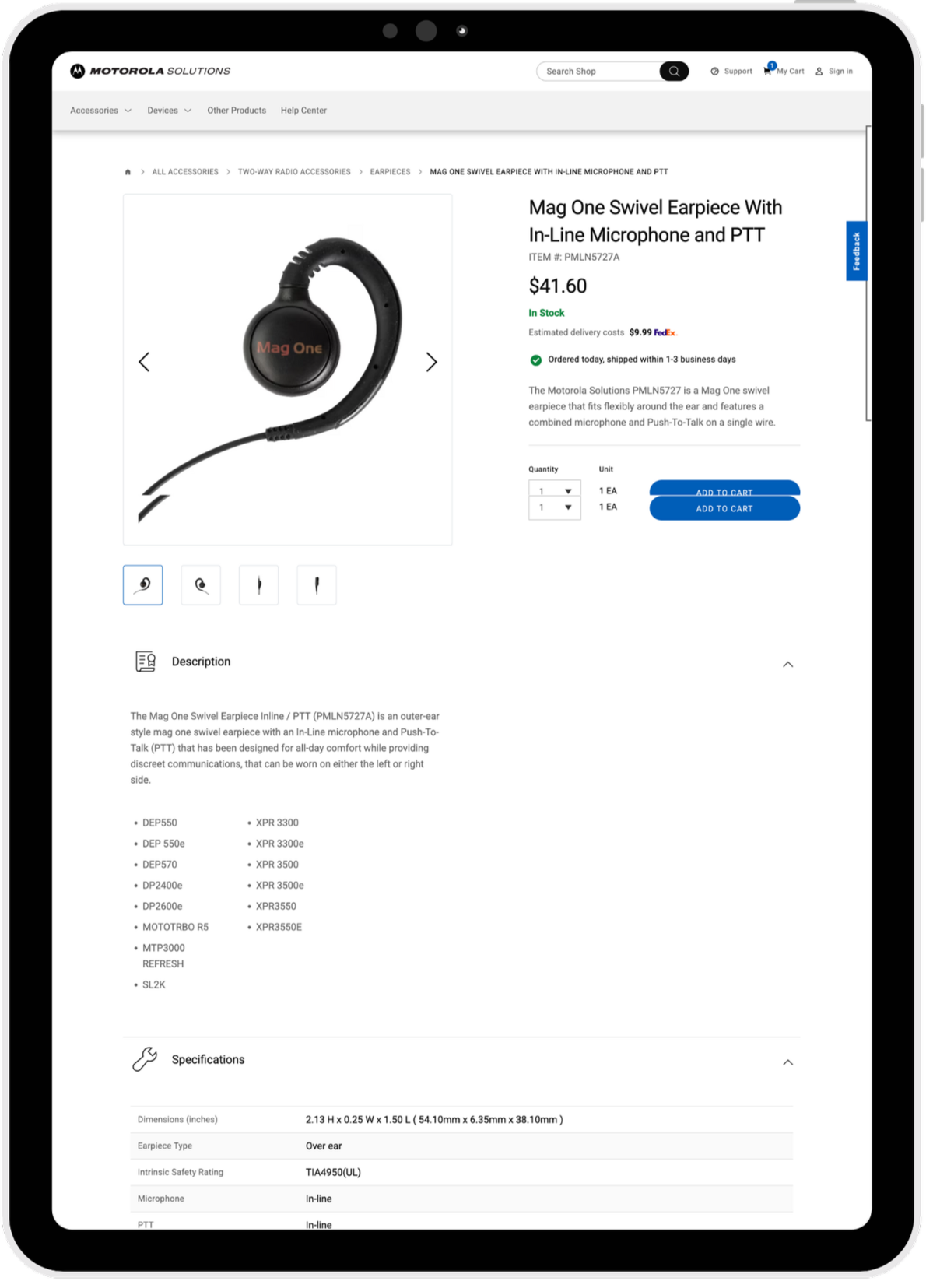
Product Details Page
Filled Cart Page
REFLECTION
08
Expand store capabilities to support global markets and multiple currencies.
Implement analytics for behavior-based optimization.
Enable account-based subscription management and bundling.
Continue unifying Motorola’s hardware and SaaS experiences within a single ecosystem.
Test and improve desktop and mobile design usability.
Iterate design to accommodate additional software subscription offerings in the Motorola Solutions portfolio.
Integrate e-commerce components to overcome technical limitations and facilitate faster, easier conversions.
FUTURE STATE
Helping define the UX for Motorola’s first digital store was both a design challenge and a systems challenge. It required balancing enterprise-level complexity with the simplicity users expect from modern e-commerce.
It was also a reminder that the most scalable designs often start with a single product — in this case, WAVE — and grow into something much larger.
“Designing clarity in complexity starts with building the right foundation.”
09